Is Too Much Social Media Advice Weakening Your Brand?
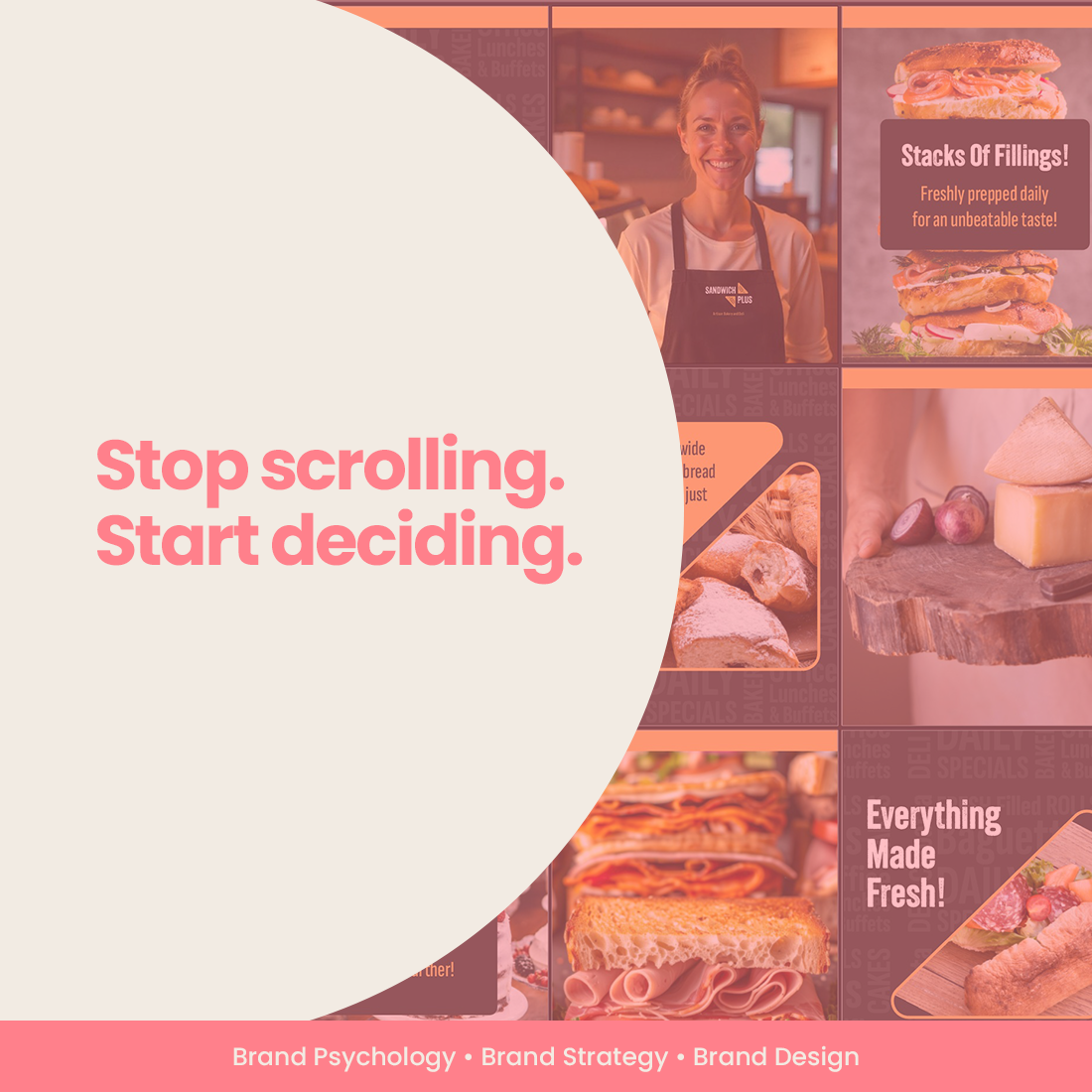
We've all been there when it comes to promoting our business on social media.
Following social media experts for the latest tips on how to beat the algorithm.
Basing our content on what competitors are doing.
Spending hours creating content.
Signing up for webinars and masterclasses – because knowledge is power and you can never know too much, right?
However, there is a risk of getting sidetracked with all the noise and distraction.
I wonder as a result, are you using your time wisely? Are you constantly playing catch-up? And are you avoiding certain tasks because you're just not sure how you should be showing up?
When inspiration turns into comparison
There is nothing wrong with looking to others for inspiration or wanting to learn more about how to grow your business.
The problem is when we start questioning what we're doing because someone else appears to be doing it differently – and successfully.
Comparing ourselves with other people isn't something that social media started. Psychologists have been studying social comparison for decades. We naturally look at other people to help us evaluate our own abilities, opinions and progress.
Social media has simply given us a lot more people to compare ourselves to.
And when you're a small business owner using social media to promote your business, it's very easy for that comparison to start influencing your decisions.
You might see someone getting great engagement from posting every day and wonder whether you should be doing the same.
You see another business launching a new service and start wondering whether you need to add something similar.
A marketing expert tells you there's a particular type of content you should be creating, while another tells you to concentrate on something completely different.
Before you know it, you're no longer looking for inspiration. You're questioning your own decisions.
What works for someone else might not work for you
The trouble is, we don't know the full story behind what we're seeing.
We don't know how long someone has been building their audience, whether they have a team helping them, how much time or money they're putting into their marketing, or what their customers respond to.
We see the result, but not necessarily everything that went into creating it.
And, most importantly, their business isn't your business.
Something can be genuinely good advice and still not be right for you.
I've experienced similar myself.
At one point, I was listening to several different mentors and marketing coaches at the same time. I was learning a lot, but I was also being given lots of different advice about what I should be doing.
And just when I thought I had a marketing strategy in place, it wasn't long before I would ditch it for another expert selling their new and improved strategy.
Before I knew it, I'd spent months studying and planning but not using my time wisely or making much progress.
Instead of gaining more clarity, all that information was creating more decisions and eating into my working hours.
Until one day, a coach spurred me to STOP and focus on one strategy and one only. To be consistent with it and trust that I would start seeing results.
So I took what resonated with me and what supported the direction I wanted to take my business – and bravely dismissed the rest.
How brand strategy can help you cut through the noise
This is where having a clear brand strategy can make a real difference.
Because brand strategy isn't simply something you create before designing your logo, colours and fonts. It helps you define who you're trying to attract, what they need from you, what makes your business different, how you want to communicate and what you want to be known for.
And that information becomes a useful filter for your marketing too.
Let's say you're scrolling through social media and see an advert for a webinar promising to teach you how to speak frankly to your audience, with “no f*ing nonsense”, so you can cut through the noise and stand out.
Now, that might sound like an extreme example, but yes, I actually saw such an ad!
Rather than immediately signing up, giving up an hour of your time and learning a completely new way of communicating, you can stop and run that advice through your own brand strategy first.
Is that my brand's tone of voice?
Is that how my audience wants to be spoken to?
Does it reflect my brand personality and values?
Would it feel consistent with the way my customers already experience my business?
And perhaps most importantly: would communicating like this actually make my brand more distinctive, or would I simply be adopting somebody else's idea of what “standing out” looks like?
For some brands, a direct, provocative tone could be completely appropriate. It might suit their personality, resonate with their audience and reinforce exactly what they want to be known for.
For another brand, copying the same approach could feel forced, confuse existing customers and gradually dilute the personality they've worked hard to establish.
Neither approach is automatically right or wrong.
The question is whether it's right for your brand.
And the same thinking can be applied to the content you create, the platforms you use, the offers you develop and the marketing opportunities you say yes to.
Instead of changing direction every time you encounter another convincing piece of advice, you have something to measure it against.
That saves you time. It helps you focus your marketing efforts. And, importantly, it helps you show up more consistently.
Because when your marketing repeatedly communicates the same values, personality, positioning and message, people have a much clearer opportunity to understand what your business stands for, recognise it and remember it.
That consistency matters when you're trying to grow a brand.
It doesn't mean shutting yourself off from new ideas or assuming your strategy should never change. Good advice can absolutely help you improve what you're doing.
But instead of asking:
Should I be doing this because everyone else seems to be?
You can ask:
Does this help me reach the right people, reinforce what I want to be known for and move my business in the direction I want it to go?
That's the difference between following marketing advice and knowing how to use it.
Your social media feed doesn't know your business
Social media is an incredibly useful tool for running and promoting a business. I've learnt a huge amount from people I've discovered online, and I certainly wouldn't suggest we stop listening to experts or looking at what other businesses are doing.
But we need to remember that the person giving the advice doesn't necessarily know our business.
They don't know our customers, our values or our business goals. They don't know what we're good at, what resources we have available or what we're ultimately trying to achieve.
And the algorithm definitely doesn't know.
So when you next find yourself disappearing down the social media rabbit hole and coming away with another list of things you feel you should be doing, perhaps ask yourself:
Who told me I have to do this?
Good advice isn’t always the right advice for your business.
Having a clear strategy means you can listen, learn and take inspiration from others without allowing every new idea to pull you in a different direction.
And perhaps that's the real advantage.
You don't need to know less.
You just need to get better at knowing what's relevant to you.
Build a brand that feels like your business
If all the advice, inspiration and comparison has left you unsure about how your business should look, sound or show up, getting clear on your own brand can help cut through some of that noise.
My Authentic Brand Package starts by getting to the heart of your business – your values, audience, personality, positioning and what makes you different – before we even begin creating your visual identity.
The aim isn't to create a brand based on what everyone else in your industry is doing.
It's to create one that gives you a clear sense of who you are, what makes you stand out, how to speak to your dream customers, and how you want your business to be seen.
Discover the Authentic Brand Package >>
Further reading
20 Healthy Approaches To Social Media For New Business Owners — Forbes, September 2025
Through thoughtful brand strategy and identity design, I help female founders craft confident brands that feel aligned and connect with their dream customers, without the overwhelm, because they deserve a business that truly thrives.