The Hidden Cost of Decision Overload in Small Business
As a business owner, you're faced with hundreds of decisions every day, and when it comes to marketing your business, that's a challenge in itself.
You have an idea of how you want your business to look and sound. But how do you fit in the time to research it, brainstorm it, or even create it?
You find yourself so overwhelmed by it that you'd rather put it to one side and deal with it next week.
Then next week arrives, and you're still asking yourself:
What should I post today?
Which photo should I use?
Does this headline sound right?
Should I change that colour?
Which email subject line will get opened?
Before you know it, the number of choices in front of you begins to slow your ability to make decisions and take action, leaving you stuck in a cycle of decision overload — sometimes referred to as decision fatigue. For many small business owners, this shows up when creating marketing, choosing priorities, or simply trying to market consistently.
When Every Decision Feels Important
When running a small business, we’re continuously wearing different hats.
One minute you're serving clients, the next you're managing admin, updating your website, or creating marketing content — throw in balancing work and home life and the challenge is real!
You've got plenty of ideas, but every task comes with another decision to make. Without realising, one decision leads to ten others.
Should you post on Instagram or LinkedIn?
Write a blog or send a newsletter?
Choose the blue graphic or the green one?
Before you know it, something that should have taken twenty minutes has turned into an hour of tweaking, second-guessing, and starting over.
There are times the internet certainly doesn't help.
Within minutes of opening your browser, you're met with endless advice on how to market your business. One person tells you to focus on Instagram, and another encourages you to start a podcast, launch a webinar, or create a lead magnet.
Most of it is well intentioned, but before you've even started, you've already used up valuable mental energy deciding what you should be doing instead of actually doing it.
This isn't just a feeling. Psychological research has shown that having more choices can reduce our mental stamina and make decision-making harder, even when those choices seem relatively small.
Marketing doesn't just require creativity. It requires constant decision-making and that's why so many business owners find themselves putting off tasks they know are important.
Why This Matters for Your Brand Strategy
One of the biggest misconceptions about branding is that it's simply about your visual identity: logo, typography, colour palette and so on.
Those things certainly matter, but they're only part of the picture.
A strong brand strategy should make running your business easier.
When you understand who your ideal customers are, what they care about, what makes your business different, and the role your brand should play in their lives, many everyday marketing decisions become much simpler.
You're no longer asking yourself:
"What should I say?"
Instead, you're asking:
"How can I say this in a way that's true to my brand?"
It's a subtle difference, but it removes a huge amount of uncertainty.
Let's use the example of a health food café owner. Every week they're faced with dozens of marketing decisions.
Do my customers want healthy eating tips, behind-the-scenes content, or promotions?
Should I spend my limited time on Instagram, Pinterest or email marketing?
Am I trying to attract busy professionals grabbing lunch on the go, or people looking for a relaxing place to meet friends?
What makes my café different from every other café in town?
Without a clear strategy, every one of those questions requires you to stop, think, and make another decision. However, with a brand strategy in place, many of those decisions have already been made.
You already know who your ideal customers are, what problems they're trying to solve, what your business stands for, the personality you want your brand to communicate, and the marketing channels that deserve your attention.
Instead of starting from scratch every time, you're making decisions from a position of clarity.
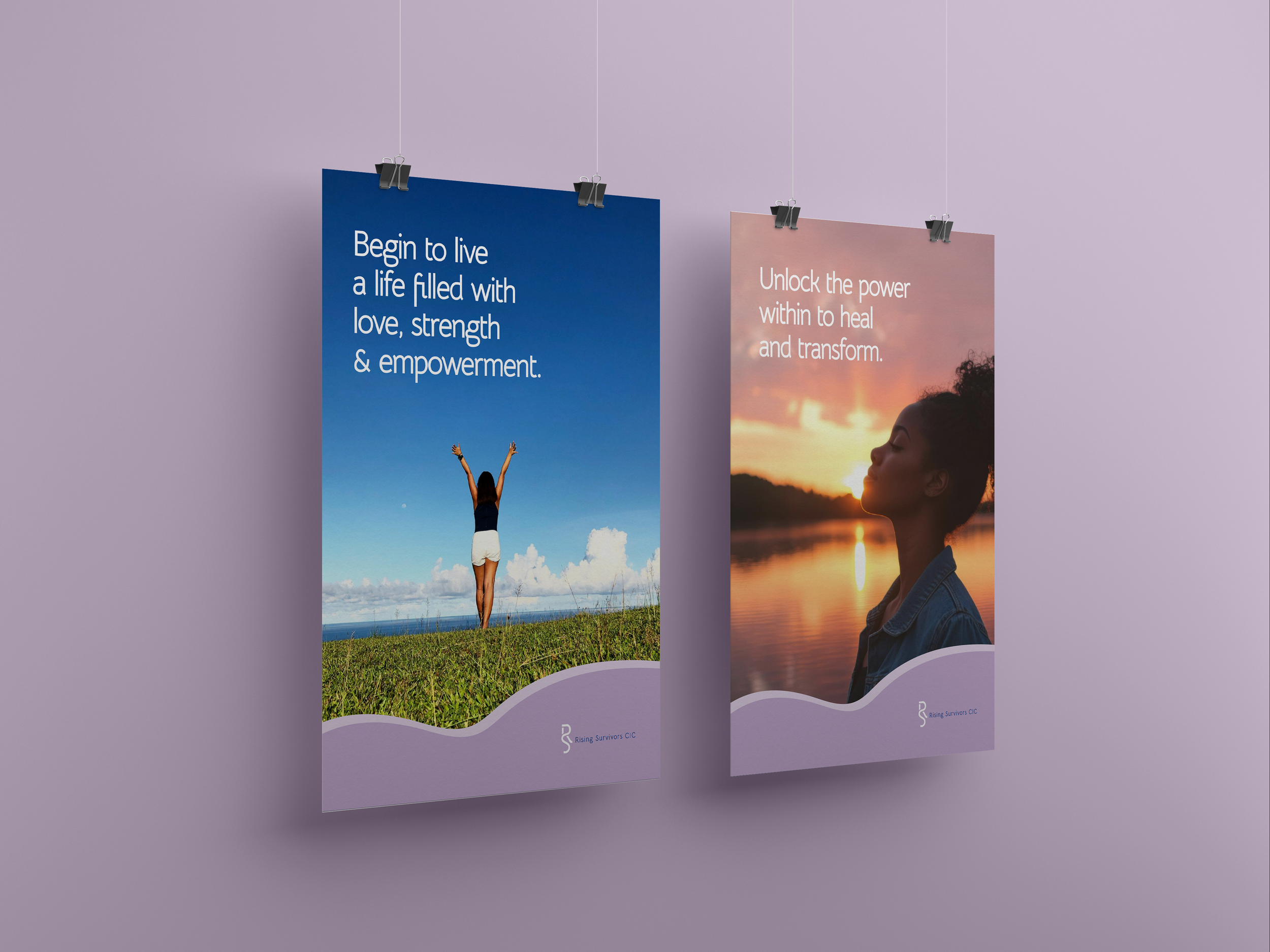
Rising Survivors CIC Brand — Campaign Posters
Brand Strategy as a Decision-Making Framework
The best brand strategies don't create more decisions; they remove unnecessary ones.
Instead of starting from scratch every time you create a social media post, write an email, or update your website, you have a framework that guides your decisions.
Your ideal customer is already defined.
Your messaging has direction.
Your tone of voice is clear.
Your goals are understood.
Your brand guidelines become a practical reference point that saves time and overwhelm. Leaving you to focus more on the reasons you started your business in the first place.
Your brand becomes less about making everything look perfect and more about making everyday marketing decisions easier.

The Real Value of a Strong Brand
When you’re a business owner not short on ideas but on time it can create real pressure on your mental energy, and headspace.
Reducing decision overload won't magically give you more hours in the day, but it can help you spend less time second-guessing yourself and more time taking action.
Because sometimes, the biggest obstacle isn't a lack of creativity but simply having too many decisions standing between your idea and the finished marketing piece.
That's where a strong brand strategy earns its value—not just by helping your business look better, but by giving you the clarity and confidence to turn ideas into action.
If you're tired of second-guessing your marketing, your brand archetype is a great place to start. It provides a clearer understanding of your brand's personality, making it easier to create consistent marketing without constantly wondering what to say next.
Through thoughtful brand strategy and identity design, I help female founders craft confident brands that feel aligned and connect with their dream customers, without the overwhelm, because they deserve a business that truly thrives.